
6 Mistakes Businesses Make in Local Facebook Groups
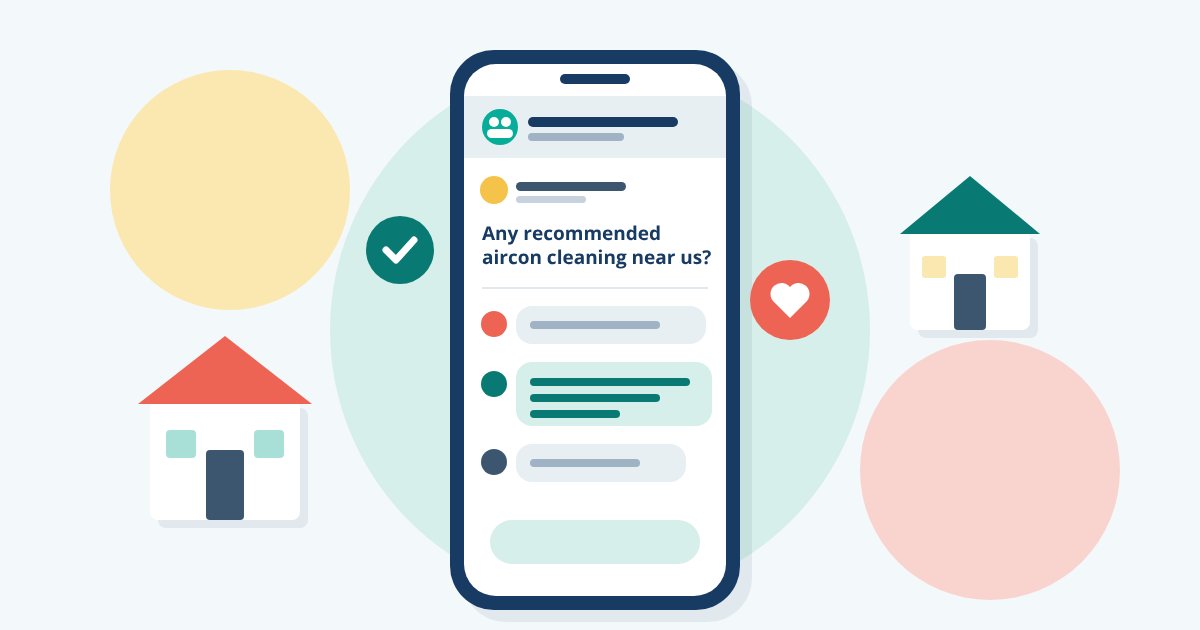
At 9 PM, someone in a barangay group asks for a good aircon cleaner nearby. By morning there are dozens of comments, some from neighbors tagging a friend, some from businesses pasting the same long ad they pasted in four other groups.
Local Facebook groups are where customers near you say out loud what they need. Many owners try them once, get no messages or a deleted post, and decide groups "don't work."
Usually, the group isn't the problem. One of these six mistakes is.
1. Joining the biggest groups instead of the active ones
A city group with 200,000 members looks like the best place to be. Often it's mostly ads, and your post sinks fast.
Instead: look for groups where your customers actually live and talk. Search Facebook for your barangay, subdivision or city name and check the Groups tab. Good places to start:
- your barangay or subdivision group
- your town or city community group
- local buy-and-sell groups
- groups for a kind of customer, like parents at a nearby school, pet owners in your city or residents of one condo building
Before joining, scroll a little. Are real neighbors posting and replying this week? A small group where people talk beats a big one full of spam. Three to five active groups near your shop is plenty.
2. Posting before you read the rules
Most groups have rules pinned at the top or in the "About" section. Common ones:
- selling only on certain days, like "Business Saturday"
- no links
- one post per business per week
- businesses must be from the area
- no selling at all, only recommendations
Break one and your post gets removed. Break a few and you may be removed too. Admins are often volunteers, and they remember.
Instead: read the rules before your first post and follow them exactly. If something isn't clear, ask an admin: "Hi po, I run a small bakery in this barangay. Is it okay to post our menu here, and on what day?" Admins tend to remember that too, in a good way.
3. Only showing up when you have something to sell
If people only ever see your name in an ad, they learn to scroll past it.
Instead: be the neighbor who knows things. Answer questions in your line of work, even when there's no sale in it today.
An aircon cleaning service can answer "How often should we clean our aircon?" A clinic can reply to "Where can I get a medical certificate on a Sunday?" with its hours.
Keep the answer short and useful. If it fits, add one line at the end: "We do this in Banilad, message our page if you need help." No price list pasted into someone else's question.
Do this week after week and people start tagging you. A tag from a neighbor counts for more than any ad.
4. Replying late, or with a pasted ad
When someone posts "Any recommended...?", the first few helpful replies get most of the attention. A reply the next afternoon is often too late. And a reply that's a copy of your full ad, with ten emojis and every price, looks like you didn't read the question.
Instead: check your groups at set times, like lunch and after dinner. When someone asks for what you do, reply in two or three lines:
- what you offer, in one line
- your area
- how to reach you
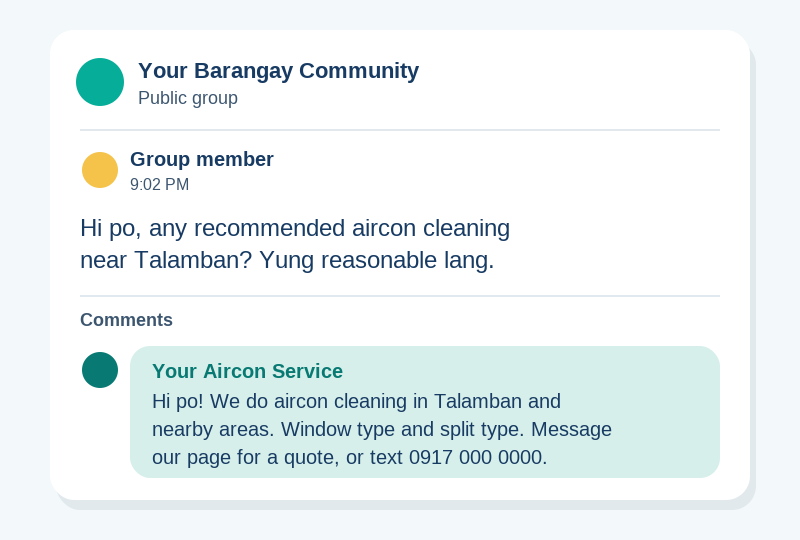
Then be ready in your inbox. A quick comment followed by a slow Messenger reply wastes the chance.
5. Copying one post into fifteen groups
It's tempting to share one post to every group you're in, all in five minutes. But the same people are in several of those groups, so they see your post again and again. Admins remove it. Facebook can also limit accounts that post the same thing to many groups quickly.
Instead: post in fewer groups, space your posts out, and change the photo or wording each time. On days the group allows selling, make that one post count:
- one clear photo of your work or product
- what it is and the price, or a starting price
- your area, and whether you deliver or do home service
- how to order or book
Write it like a neighbor, not a billboard. "Fresh ube cheese pandesal, ₱120 for a pack of 10. Pickup in Lahug, or delivery nearby. Message to order for tomorrow" works better than ALL CAPS. For more on this, see Facebook Captions That Get Customers to Message You.
6. Disappearing after you post
Some owners post and check back two days later. Meanwhile, people asked "Magkano po?" and "Saan location?" in the comments and got no answer.
Instead: treat every comment like a customer at your counter. Reply to each one politely, even when your post already has the answer. Other members are reading. If someone leaves a bad comment, a short, calm reply looks better than an argument.
It also helps if people can tell who you are. Many groups only let members join with a personal profile, while some allow business pages to post if the admin turns that on. Check what each group allows. If you post as yourself, make sure your profile shows where you work and links to your business page. Whichever way you post, keep it the same so people start to recognize you.
Give group members somewhere to check you out
When someone sees your name in a group, the next thing they do is look you up. If they find your prices, area and how to book in one place, they're more likely to message. A simple website does that job, and it's easy to share in a comment when the group allows links. We wrote more about this in Do I Still Need a Website If My Business Is on Facebook?
DotCity builds a website from the Facebook page you already have. You get a free preview within 48 hours, and your first month is free. After that, the Standard plan is ₱1,499 a month, with no setup fee. Hosting and updates are included, and you can pay by GCash.
- Message us on Messenger for a free preview: https://m.me/dotcity.ph
- Or try our free audit to see what to fix first: https://dotcity.ph/audit