
Payday Weekends: Planning for the 15th and the 30th
It's the Saturday after the 15th. Your salon is full by 10 AM, two walk-ins are waiting, one of your stylists is on day off, and you run out of the treatment everyone wants. The next Tuesday, the same salon is so quiet you spend the afternoon on your phone.
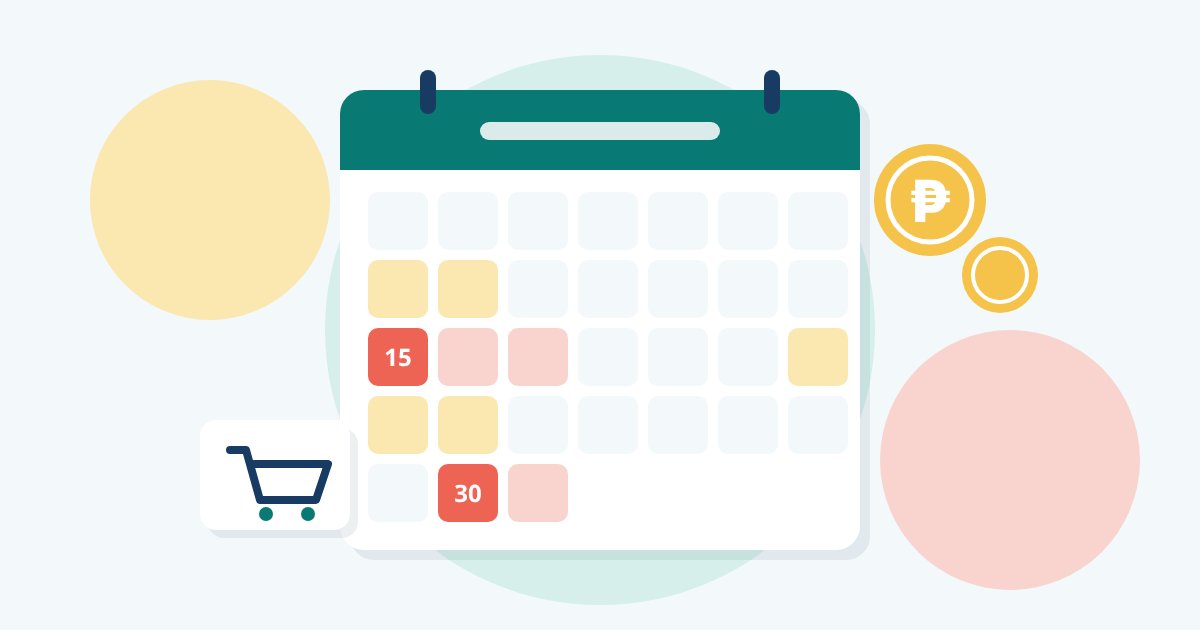
If this sounds familiar, you're not imagining it. Many businesses in the Philippines notice that customers spend more right after payday, around the 15th and the 30th, the kinsenas and katapusan. Salons, milk tea shops, food sellers, gyms and online shops often see the same pattern: busy just after payday, slower in the middle of the period.
You can't change when your customers get paid. But you can plan your weeks around it, so the busy days don't overwhelm you and the slow days don't go to waste.
1. Check your own pattern first
Not every business follows payday the same way. A carinderia near an office may feel it the very day salaries come in. A salon may feel it on the weekend after. A clinic may barely notice it at all.
Look back at the last two or three months. Use whatever you have: your sales notebook, your booking list, your GCash history, or even how many messages you got each day. Mark the days that were busy and the days that were slow. You'll usually see your own rhythm within a few minutes.
Write it down in one line, for example: "Busiest: the Friday to Sunday after the 15th and 30th. Slowest: the 6th to 12th and the 21st to 27th."
2. Put your staff where the customers are
Once you know your busy days, plan your schedule around them.
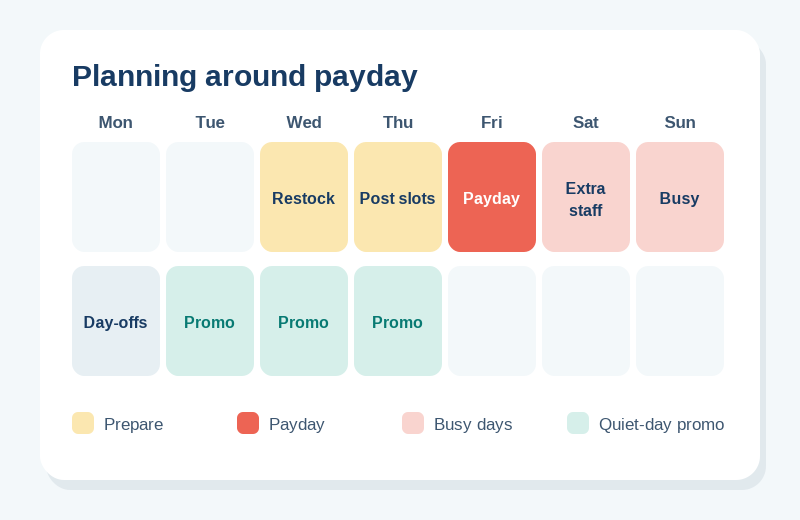
- Avoid giving day-offs on the days right after payday.
- If you have part-time or on-call help, book them for those days ahead of time.
- Give leaves, trainings and day-offs on the quieter weeks instead.
Tell your team the plan at the start of each month. People can plan their own lives better when they know which days are "all hands" and which days are free.
3. Stock up before payday, not after
Running out on your busiest day is the most expensive kind of shortage. Customers who came to buy go somewhere else.
A few days before each payday, check your best sellers and the supplies you use most. A cake seller might buy extra flour and boxes. A salon might check hair color and treatments. A pet shop might restock its most popular dog food.
Do the opposite in the slower weeks. Order less of things that spoil, like fresh ingredients, so they don't go to waste while things are quiet.
4. Open more booking slots on payday weekends
If you take appointments, payday weekends will fill first. Plan for it:
- Open those slots early, and tell customers they can book ahead.
- Keep your booking list in one place so you don't give the same slot to two people.
- Send a reminder the day before, because a no-show on your busiest day hurts the most.
- Keep a short waitlist, so a cancelled slot goes to someone else.
A gym might add an extra class on the Saturday after payday. A barbershop might open an hour earlier on those Saturdays.
5. Time your posts and promos
Post when people are ready to buy. A few days before payday, start showing what's available: new products, open slots, your best sellers with their prices. On payday itself, a simple reminder works well:
"Payday weekend! We still have slots on Saturday and Sunday. Message us to book po."
You don't always need a discount on payday weekends. People are already spending. Save your promos for the days you actually need help.
6. Use the slow days on purpose
The quiet days in the middle of each period are not wasted days. Here are some ways to use them:
- Run a mid-period promo. A "Tuesday to Thursday" rate for haircuts, a weekday class pass at the gym, or a small free add-on for bookings on quiet days. This moves some customers from your crowded days to your empty ones.
- Offer smaller sizes or bundles. A food seller can push a smaller tray or a budget meal for the days before payday, when customers are counting their money.
- Do the work you never have time for. Deep clean, fix equipment, take new photos of your products, update your prices, and reply to old messages and reviews.
- Plan the next payday. Write your posts in advance and check your stock list.
Many owners find that a steady flow on quiet days matters as much as a full house on payday.
7. Get ready for the bigger paydays in December
The same pattern grows at the end of the year. Many workers receive their 13th month pay in December, and there are Christmas parties, reunions and gifts to buy. If you have learned your payday rhythm in November, you'll be ready for a December where it is even stronger.
Use the November paydays as practice. Note what ran out, which days needed more staff, and which posts got the most messages. Then plan December with those notes in hand.
Let customers find you before payday
Customers often decide where to spend before payday arrives. They look up prices, check what's available, and ask which slots are open. A simple website can show your services, prices and booking request form in one place, so they are ready to book the moment their pay comes in.
DotCity builds a website from the Facebook page you already have. You get a free preview within 48 hours, and your first month is free. After that, the Standard plan is ₱1,499 a month, with no setup fee. Hosting and updates are included, and you can pay by GCash.
- Message us on Messenger for a free preview: https://m.me/dotcity.ph
- Or try our free audit to see what to fix first: https://dotcity.ph/audit